Quick Answer
While Epic and Cerner dominate hospital systems, SimplePractice and TherapyNotes are most commonly used by independent mental health practices. The “best” EMR depends on your practice type, with many clinicians now supplementing primary EMRs with AI documentation tools to streamline SOAP note generation and reduce administrative burden.
What EMR Program Is Most Commonly Used?
If you’re managing a mental health practice, chances are you’ve found yourself overwhelmed with paperwork at some point. The reality is, there isn’t one electronic medical record (EMR) program that stands out as the most commonly used across all healthcare settings – it really depends on the size of your practice, your area of specialty, and what specific needs you have. However, when we narrow it down to mental health practices in particular, some systems clearly rise to the top.
From what I’ve seen, many healthcare professionals are turning to platforms like SimplePractice and TherapyNotes, as well as specialized EMRs designed for behavioral health. These systems stand out because they approach mental health documentation in a way that’s tailored to the unique needs of therapists and counselors. They’re designed to make it easy to document sessions, track patient progress, and handle the specific documentation requirements of the field. This is a big difference from general medical EMRs, which often don’t quite fit the needs of mental health professionals. By using these specialized platforms, therapists and counselors can work more efficiently and effectively, and provide better care to their patients.

The Heavy Hitters in Mental Health EMR
Let’s talk about what’s actually being used out there. SimplePractice has become the go-to for solo practitioners and small therapy practices. It’s cloud-based, relatively intuitive, and handles billing alongside clinical notes. TherapyNotes serves a similar market but appeals to clinics that need stronger EHR functionality alongside practice management.
When it comes to bigger organizations and hospitals, the picture is different. You’ve got other major players in the game, like Epic and Cerner, who are really big names in this field. But for mental health practices that are on their own, these systems can be too much to handle. They’re often more than what’s needed, and that can be a problem.
Why Mental Health Needs Different Tools
Here’s what most people miss: mental health documentation looks completely different from medical documentation. You’re not just tracking vitals and medications (though sometimes you are). You’re capturing session notes, treatment plans aligned with diagnosis, progress toward specific therapeutic goals, and safety considerations. Your soap notes for mental health or soap psychotherapy notes need structure that respects the therapeutic process.
This is where general-purpose medical EMRs start to feel clunky. They weren’t designed with your workflow in mind. A psychiatrist documenting medication adjustments needs something different than a therapist capturing session content and therapeutic interventions.

The Rise of AI-Enhanced Documentation
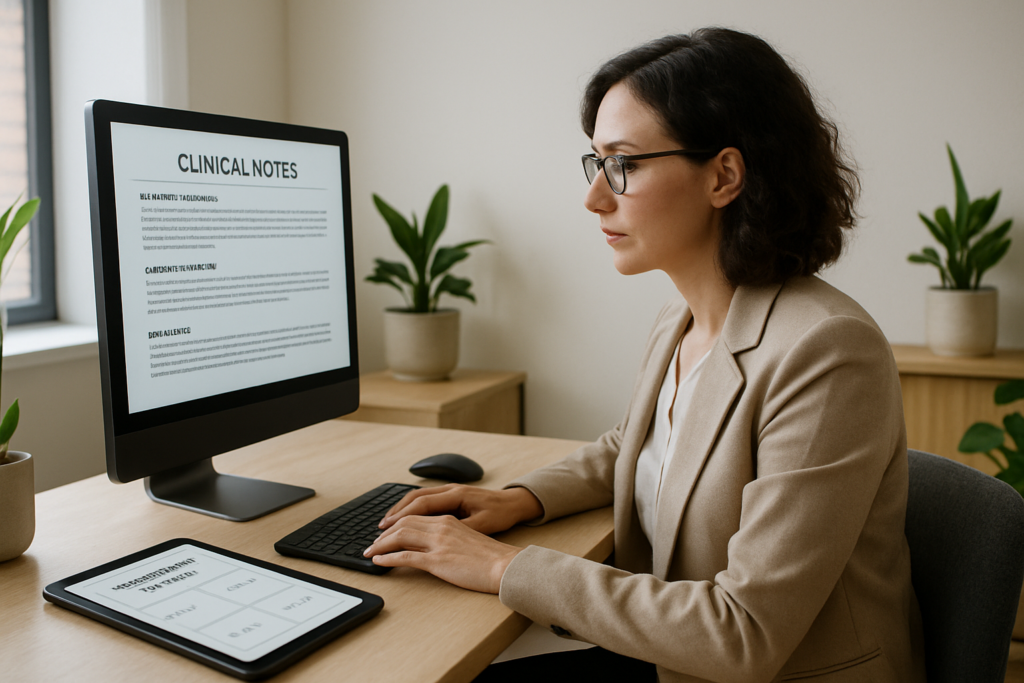
I’ve noticed a significant change in how medical practices are using artificial intelligence to improve their documentation process. A lot of clinicians are now using AI tools, like free note-taking apps or AI-powered doctor’s note systems, to help with their workload. These tools are really useful because they can record audio from sessions and automatically generate draft notes. Clinicians can then review and edit these notes, which saves them a huge amount of time that they would have spent on administrative tasks. This is a big deal, as it means they can focus more on patient care and less on paperwork.
It’s clear why this is so appealing – you get to keep the high clinical standards and HIPAA compliance, but you cut down a lot of time spent on clinical notes using AI. Some medical practices are using these tools on their own, while others are incorporating them right into their current EMR workflows. This way, they can make the most of their time and resources.

Special Considerations for Different Practice Types
Running an ABA therapy clinic? Your documentation needs differ significantly from traditional talk therapy. You’ll want systems that handle aba session note template structure naturally—tracking discrete trials, frequency of behaviors, reinforcement schedules. Practices I’ve worked with in this space often use specialized ABA software or heavily customize their EMR templates.
When it comes to mental health clinicians working in hospitals or clinics, they often have limited flexibility. This is because they’re usually tied to the system that their organization has put in place. On the other hand, if you’re working solo or in a small group practice, you’re in a much better position to choose the technology that really works for you. You don’t have to compromise on someone else’s platform – instead, you can pick the tools that fit your actual needs. This can be a huge advantage, as you can tailor your technology to suit your specific practice and workflow.

What Should You Actually Choose?
Stop trying to pick the “most common” system. That’s the wrong question. What you should ask yourself is: does this platform handle my specific documentation style? Can I generate sample soap notes mental health efficiently? Does it integrate with my billing and scheduling? Will it reduce my administrative burden or add to it?
It’s really important to think about what works best for your own situation, rather than just going with what’s popular. A lot of the time, the systems that everyone uses are that way because of good sales and marketing, not because they’re actually the best for every kind of practice. What’s key is finding a system that fits with how you do things, your workflow, and what you need to get done.
That’s where solutions like CliniScripts come in—specifically designed for mental health transcription services that understand your documentation needs intimately. Instead of fighting your EMR to capture what you’re actually saying, you’re working with tools purpose-built for mental health clinicians.
The best EMR program for your practice isn’t the most common one. It’s the one that disappears into your workflow so you can focus on what actually matters: your clients and their progress.
Frequently Asked Questions
What’s the difference between an EMR and an EHR?
An EMR (Electronic Medical Record) is a digital version of a patient’s paper chart within a single practice. An EHR (Electronic Health Record) is a broader system that shares patient information across multiple providers and healthcare organizations. Most mental health practices use EMRs.
Is SimplePractice really the most popular for therapists?
SimplePractice dominates among solo and small group therapy practices due to ease of use and integrated practice management. However, larger organizations, clinics, and hospital-based practices use different systems. It’s the most popular among independent practitioners, not necessarily across all mental health settings.
Can I use an AI note taker with my existing EMR?
Many can be integrated, though it depends on your system. Some AI documentation tools connect directly to platforms like SimplePractice; others generate notes you manually import. Always verify HIPAA compliance and check whether your EMR’s terms of service allow third-party integrations.
What makes a good EMR for SOAP notes in therapy?
Look for systems with customizable templates that reflect your theoretical orientation, clear prompt structures for subjective/objective/assessment/plan sections, and easy navigation during or after sessions. Mental health-specific platforms tend to handle this better than general medical EMRs.
How much does the “most common” EMR cost?
SimplePractice ranges from $60-$200+ monthly depending on features. TherapyNotes runs similar pricing. Hospital-based systems like Epic involve substantial licensing fees (thousands monthly for practices). Many mental health practices now factor in AI transcription costs alongside traditional EMR subscriptions.





 All Rights Reserved