
Quick Answer
AI therapist notes assist with documentation efficiency by transcribing sessions and structuring SOAP notes, but they can’t replace clinical judgment or guarantee compliance. Successful implementation requires clinician review, verification for accuracy, confirmation of legal/HIPAA standards, and layering AI output with your clinical expertise and observations. AI works best as a documentation assistant, not a replacement.
Understanding AI Therapist Notes in Modern Practice
Let’s cut through the noise. AI therapist notes have become a hot topic in mental health documentation, but there’s a lot of confusion about what they actually are and what they can—or can’t—do. I’ve watched clinicians get excited about the efficiency promise, only to realize later that the reality is more nuanced. Here’s what you actually need to know.
The shift toward AI-assisted documentation started with a genuine problem: clinicians spend way too much time on paperwork. A therapist seeing clients all day gets stuck writing notes late into the evening. So naturally, when a free AI note taker or AI for clinical notes showed up promising to save hours, it sounded like a miracle. The question isn’t whether AI can help—it’s whether it can help in a way that protects your clients and keeps your notes clinically sound.

The Myths That Need Busting
Myth #1: AI Can Replace Your Clinical Judgment
The problem with AI therapist notes tools is they don’t really get what’s going on with your clients. They can’t pick up on the little things like a change in tone that means something big is happening or when someone hesitates because they’re hiding something. What works is using AI to get the basic facts down, so you’re not starting from scratch. But the first draft it comes up with? That needs a professional like you to review it and make sense of it. AI is good for getting the basics right, but it’s your expertise that really matters. You need to look at what the AI comes up with and add your own insights to make it really useful. That way, you can be sure you’re getting the whole picture and not missing anything important.
Myth #2: AI-Generated Therapist Notes Are Always Legally Compliant
That’s not right. An AI system that generates doctor’s notes doesn’t have knowledge of the specific licensing requirements in your state, or the rules for insurance credentialing, or the particular details that need to be included in a client’s file. I’ve talked to therapists who found out the hard way that the notes generated by AI were missing important clinical information that their licensing board required. Your documentation is not just about remembering things – it’s a legal document that has to be done correctly. This is important because it can have serious consequences if it’s not done right.
Myth #3: Free Tools Give You the Same Quality as Paid Solutions
You usually get what you pay for. If you use a free AI note taker, it might get the basic facts right, but it often has trouble understanding clinical terms and mental health language. Sometimes, the notes it creates sound like they were written by a robot, and they don’t really capture the important details. On the other hand, if you use a note-taking system that’s specifically designed for psychotherapy notes, like a SOAP notes template for mental health, you’ll probably notice a big difference. These systems are made to understand the language and terminology that mental health professionals use, so they can create more accurate and helpful notes.

Here’s What Actually Works
AI for Clinical Notes Done Right
The reality is that AI therapist notes technology works best as a documentation assistant, not a replacement. Here’s the practical approach I’d recommend:
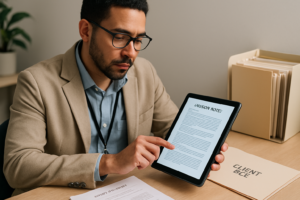
Start by using a transcript as a base. Record your conversation, making sure to get permission first, and then use AI to transcribe what was said. This way, you get an exact record of what happened, which is really important for getting things right. Edit ruthlessly for clinical detail. The AI transcription gives you the skeleton. You add the clinical meat—your observations, your clinical assessment, your treatment plan adjustments. Ensure HIPAA compliance and confidentiality. Not all AI platforms meet healthcare privacy standards. Check their data handling policies, encryption, and whether they store your notes indefinitely. When it comes to keeping track of your sessions, you need a system that fits your style. If you’re using SOAP notes for mental health or ABA session note templates, your tool should be able to match that format. A one-size-fits-all template just won’t do – you need something that outputs the specific structure you’re used to. This way, you can focus on what really matters: helping your clients and making progress. Double-check before you’re done. Your name is attached to that note, and your professional license is at stake. Take a few minutes to read through it, make any necessary corrections, and add some clinical context that AI systems can’t provide. This extra step is crucial to ensure accuracy and completeness.
What AI Actually Does Well
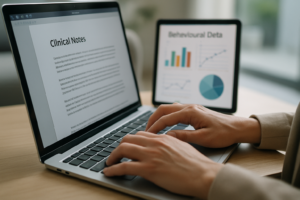
Let’s be clear – there are some real advantages to using AI for note-taking. It’s really good at handling the mechanical side of things, like pulling out important details such as dates, medication names, and topics discussed during sessions. This can be a huge help in reducing the time spent on transcription, which can be a big burden for busy clinics. By taking care of the data entry tasks, AI can free up therapists to focus on what really matters – using their clinical skills to make a difference. This means they can spend more time thinking about their patients and how to help them, rather than getting bogged down in paperwork.
The sweet spot? Using AI for clinical notes to handle the data capture and basic structure, then layering your expertise on top. That’s when you get efficiency without sacrificing quality.

Real Talk About Documentation Standards
Your SOAP notes for mental health need to include specific elements: subjective experience, objective observations, assessment (clinical thinking), and plan. AI therapist notes can help structure these sections, but the clinical content—your assessment—has to come from you. An AI note taker can say “client reported feeling anxious.” Only you can write “Client’s anxiety appears related to upcoming performance evaluation; using CBT techniques to address catastrophic thinking patterns.”
That’s the line. AI handles documentation logistics. You handle clinical substance.

The Practical Reality Check
What I’ve noticed in real-life situations is that clinics that successfully use AI for clinical notes tend to start with small steps. They don’t attempt to automate their entire process right from the beginning. Instead, they select one provider to begin with, create templates that align with their existing documentation standards, and provide training to their staff on the new workflow. From there, they make adjustments and refinements based on how the system actually performs in practice.
Clinics that have a tough time usually made a choice based on cost or popularity, without thinking about what they really needed for their notes, like templates for ABA sessions or regular therapy notes. They also didn’t plan for how the new tool would fit in with what they were already using.
To get the most out of AI therapist notes, you need to be honest with yourself about what they can and can’t do. They’re a useful tool, but they’re not a magic solution – they require effort and review to be effective. When you understand their limitations and are willing to put in the work, AI therapist notes can be a real productivity booster. It’s all about being clear on what you’re getting and what you need to do to make them work for you.
Ready to actually see how this works in your practice? The key is choosing tools designed for mental health documentation specifically, not generic medical note generators. Your soap psychotherapy notes deserve that level of specificity, and so does your documentation workflow.

Frequently Asked Questions
Can AI therapist notes replace my clinical documentation entirely?
No. AI can structure and transcribe your sessions, but your clinical judgment, assessment, and treatment planning must come from you. AI handles data capture; you handle clinical substance.
Are free AI note takers sufficient for mental health documentation?
Free tools vary widely in quality and compliance. They often lack mental health-specific language and may not meet HIPAA requirements. Purpose-built solutions designed for soap notes mental health typically provide better accuracy and legal protection.
What should I look for in an AI for clinical notes?
Verify HIPAA compliance, check that it supports your documentation format (SOAP notes, ABA templates, etc.), ensure it integrates with your practice management system, and confirm that your data isn’t stored indefinitely or used for model training.
How do I ensure AI-generated therapist notes stay clinically accurate?
Always review notes before finalizing. Add your clinical observations, verify all client information, include your assessment and clinical reasoning, and correct any errors or missing context that AI missed.
Is an AI doctors note legally defensible in mental health?
Only if it meets your state’s licensing and documentation requirements and includes the clinical detail your board expects. Generic notes may not satisfy regulatory standards. Verify compliance requirements for your jurisdiction before relying on AI output.



 All Rights Reserved