

Effective note taking is crucial for therapists to maintain clinical accuracy and build strong client relationships. Learn top strategies for improving your note taking skills in therapy.
Reviewed by founder & CEO, Nauman Jaffar
Transcribe Audio to Text: Essential Strategies for Therapy Note Taking
Therapists are absolutely essential in the mental health journey; they often serve as a guiding light for those trying to make sense of their thoughts, feelings, and emotions. One key method that plays a vital role in this process is note taking. Not only does it promise clinical accuracy, but it also carries the important task of maintaining the therapeutic alliance—the special bond between therapist and client. Striking a balance between these elements is truly an art that demands careful attention, intention, and a deep respect for the therapeutic journey.
When discussing effective note-taking in therapy, many therapists find that incorporating structured methods like DAP Notes (Data, Assessment, Plan) can significantly improve the organization and clarity of their documentation. This approach helps therapists systematically record key elements of each session, ensuring both clinical accuracy and the ability to track progress over time. If you’re curious about how DAP Notes can enhance your note-taking process and improve treatment outcomes, check out our detailed article on DAP Notes in Therapy. In this post, we explore the benefits of this method and how it can complement traditional note-taking approaches to provide more structured and insightful documentation.
The Purpose of Note Taking in Therapy
At its heart, note-taking in therapy serves several important purposes:
- Documentation: Therapists keep track of progress, insights, and interventions to make sure each session builds on the previous one.
- Clinical Accuracy: Detailed notes are essential for assessing a client’s journey over time and guiding treatment choices.
- Legal Protection: In certain situations, these notes can act as legal documents that safeguard both the therapist and the client.
That said, while these functions are crucial, it’s important that note-taking doesn’t interfere with the deep connection that develops in the therapeutic environment. Utilizing Mental Health Transcription Services can help therapists manage their notes without losing that vital connection.
Why Connection Matters
The therapeutic alliance is often seen as one of the key factors that can predict how well treatment will go. When there’s a strong connection, it creates a foundation for:
- Trust: Clients feel safe enough to open up about their deepest thoughts and feelings.
- Engagement: When clients feel truly seen and heard, they’re more likely to dive into the process.
- Empowerment: A strong therapeutic relationship inspires clients to take charge of their own healing journey.
However, if therapists get too caught up in taking notes, they might lose that vital connection, which can slow down progress and lessen the overall effectiveness of therapy.

Striking the Right Balance
The real challenge is striking the right balance between being clinically precise and fostering the emotional connection that clients are looking for. Here are some practical strategies that can help therapists find that sweet spot:
1. Active Listening
Instead of writing down every single word, therapists can really benefit from active listening. By giving their full attention to what the client is saying, they can better understand what’s truly important to capture. Active listening involves:
- Using both verbal and non-verbal signals to pick up on emotions.
- Asking questions that clarify and deepen understanding.
- Summarizing the main points to ensure everything is clear.
After the conversation, jotting down notes that highlight the main themes rather than getting bogged down in tiny details helps keep the essence of the discussion intact while strengthening the connection. Additionally, therapists may find value in leveraging Psychological Transcription methods to enhance their documentation.
2. Timely Note Taking
Taking a few moments at the end of a session for note-taking can really help keep the connection strong. This method gives therapists a chance to process and reflect on everything that was discussed, all without breaking the flow of conversation. Plus, dedicating a little time at the end for jotting down notes can show clients that their time and experiences truly matter.
3. Use of Technology
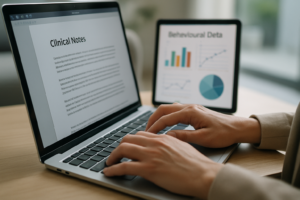
In today’s digital age, using secure record-keeping software can really streamline the note-taking process. Tools like EMRs (Electronic Medical Records) enable quick and standardized note-taking, allowing you to keep your attention on the client. Many of these platforms come with templates that emphasize key details, making documentation not just efficient but also effective. Consider using Therapy Transcription Services to further enhance your efficiency.
4. Client Involvement
Getting clients to share what resonates with them during a session can really boost the note-taking experience. Therapists might ask questions like:
- “What really stood out to you today?”
- “Is there a particular theme you’d like to focus on for our next session?”
This collaborative method not only gives clients a sense of empowerment but also makes the notes more meaningful, paving the way for a more personalized therapeutic journey. Engaging in Mental Health Dictation Services can also support this involvement.

Conclusion
Note taking in therapy is a delicate dance, where the need for clinical accuracy meets the vital task of building an emotional bond with clients. By using strategies like active listening, leveraging technology thoughtfully, and inviting client feedback, therapists can skillfully manage this intricate balance. This approach not only sharpens their clinical skills but also nurtures deeper, more meaningful connections in the therapeutic relationship—making the journey to healing both effective and compassionate. By continuously reflecting on and fine-tuning these methods, therapists can enhance their abilities in Medical Transcription For Mental Health, ultimately enriching the therapeutic experience for their clients. After all, genuine healing happens in a safe, trusting environment, where both precision and connection can flourish side by side.



 All Rights Reserved