
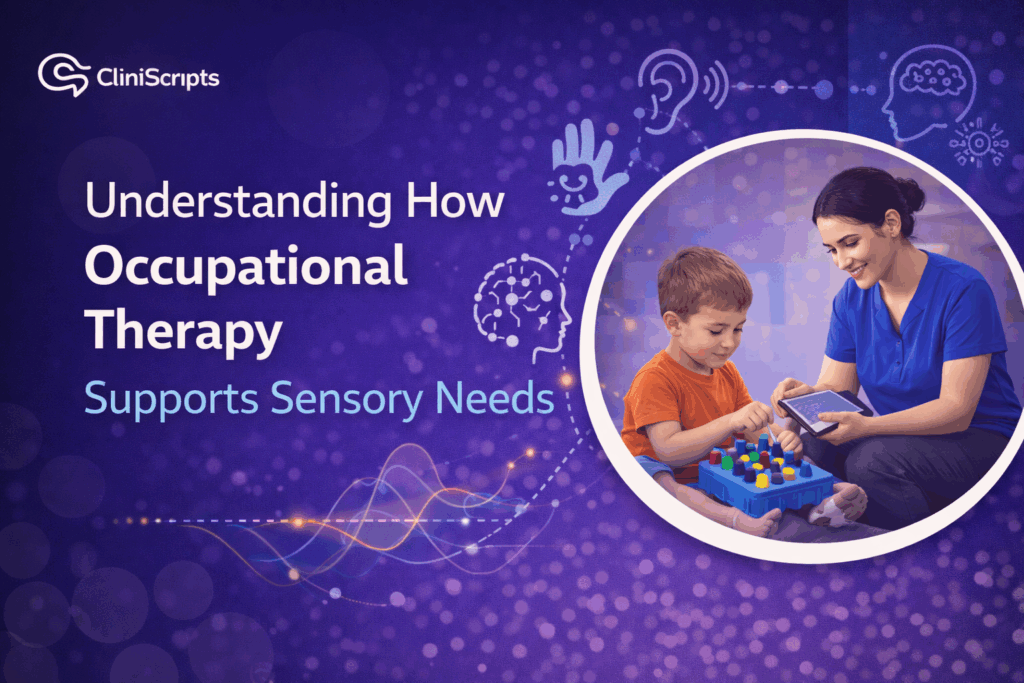
In CliniScripts, each child and family comes in with another tale. Simple things like dressing up, sitting in a classroom, or playing a game can be sensory issues. We are trying to make you understand how ot for spd can be introduced into everyday life and how comfortable and confident a person can become through the treatment of gentleness and practicality.
Families, we collaborate with you to make therapy feel like an extension of the day rather than an activity.

What Sensory Processing Differences Look Like in Daily Life
Children who have problems in sensory processing can be incredibly sensitive or insensitive to sounds, touch, movement, or light. You might notice:
- Trouble with noisy places
- Avoiding certain clothes or textures
- Constant movement or seeking pressure
- Significant reactions to small changes
These responses are not behavior problems. They are the body asking for help to feel safe and balanced.

How Occupational Therapy Helps in Simple Ways
Ot for spd focuses on building skills through play and routine. Therapy sessions are shaped around what your child already loves and does every day.
Some everyday therapy activities include:
- Swinging and climbing to support body awareness
- Deep pressure games for calming the nervous system
- Fine motor play for hand strength and focus
- Visual and listening tasks to support attention
We keep goals realistic, so progress feels natural, not rushed.

What Makes Our Therapy Approach Family Friendly
We believe parents and caregivers are part of the therapy team. You know your child best, and your daily observations guide our planning.
Our care focuses on:
- Clear home strategies you can use right away
- Simple sensory routines for mornings and bedtime
- Ongoing progress tracking
- Open communication with therapists
This helps therapy continue beyond the clinic walls.
How Ot for spd Builds Confidence Over Time
With the proper support, children begin to feel more in control of their bodies and reactions. Small wins matter, like sitting longer at the table or enjoying group play.
Over time, ot for spd can support:
- Better attention in school
- Calmer responses to change
- Stronger coordination
- Improved self-care skills
Each step adds to a child’s sense of independence.

Common Questions Parents Ask
- Is sensory therapy only for young children?
No. Sensory needs can show up at any age, and therapy plans adjust as children grow.
- How often are sessions needed?
This depends on individual goals. Some families start weekly and review progress together.
- Can therapy be part of school support?
Yes. What is acquired during therapy is usually transferred to classroom life and social life.
Walking the Journey Together
We are interested in making therapy at CliniScripts cozy, practical, and easy to follow. We listen, strategize, and help your child develop one step at a time. Feeling informed and engaged makes any progress appear gradual and significant among families.





 All Rights Reserved